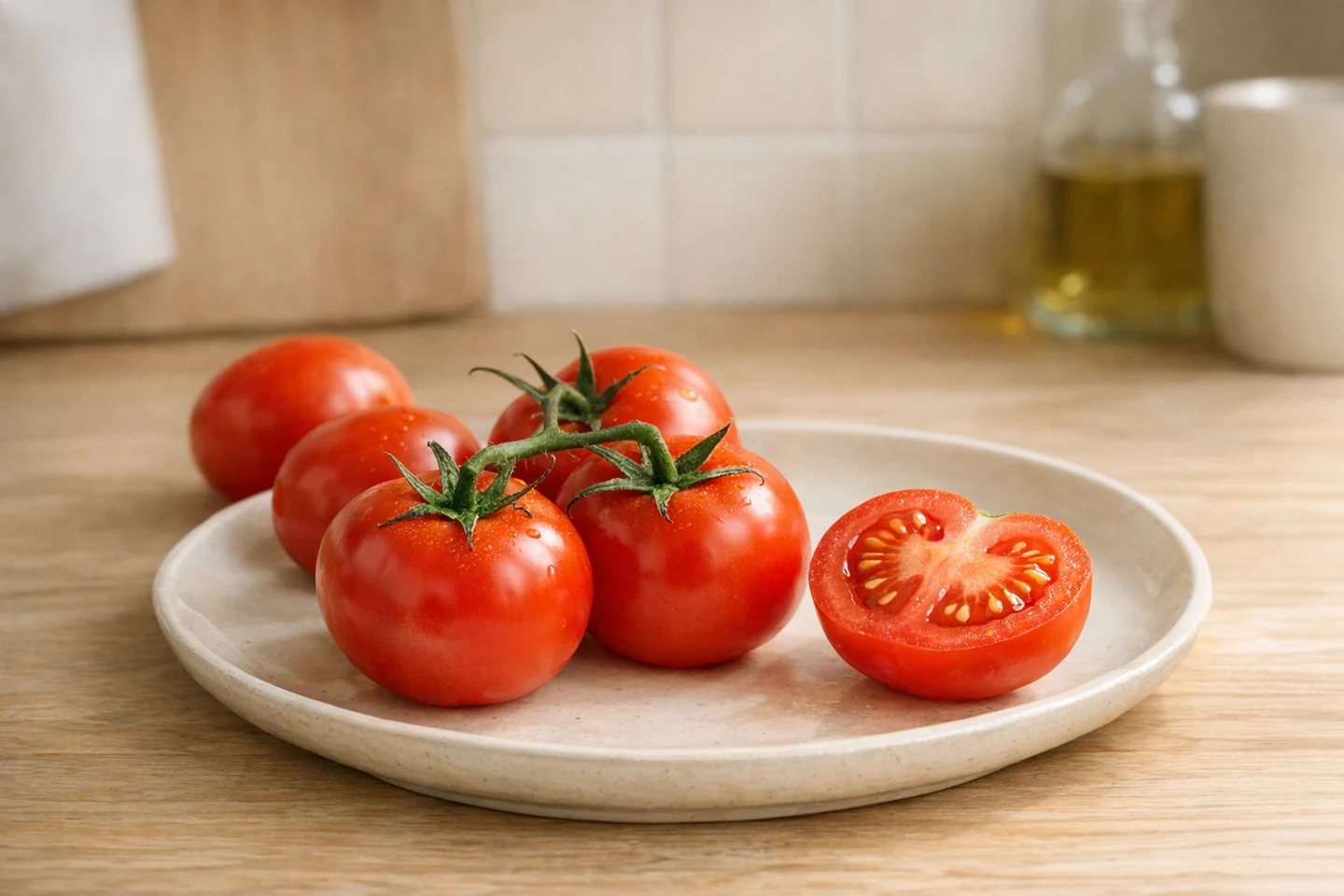
Yes, you can freeze tomatoes. Freezing is an excellent way to save a glut, although thawed tomatoes are best used in cooked dishes because their texture becomes softer and wetter.
Quick reference chart
| Question | Best answer | Why it matters |
|---|---|---|
| Whole tomatoes | Yes | Freeze firm tomatoes for sauce or soup. |
| Chopped tomatoes | Yes | Portion with their juices for cooking. |
| Cooked tomato sauce | Yes | Cool promptly before freezing. |
| Skin removal | Easy after thawing | The skin slips away as tomatoes soften. |
| Best freezer time | About 6 months | Use in cooked dishes for best results. |
Step-by-step method
- Choose ripe, unblemished tomatoes and wash them well.
- Remove stems and cut away any damaged patches.
- Freeze whole tomatoes on a lined tray, or chop them if you prefer ready-to-cook portions.
- Once firm, transfer tomatoes to labelled freezer bags or containers and press out excess air.
- Freeze cooked tomato sauce only after it has cooled promptly in shallow portions.
- Thaw in the fridge or add straight to soups, sauces and casseroles; peel skins off after thawing if you prefer.
Can you freeze whole tomatoes?
Yes. Whole tomatoes are the quickest method. Freeze them on a tray first, then bag them for soups, sauces and casseroles.
Do tomatoes go mushy after freezing?
They become soft and release juice after thawing, which is normal. Use frozen tomatoes in cooked dishes rather than salads or sandwiches.
Can you freeze tomato sauce?
Yes. Cool it promptly, divide it into meal-sized portions and freeze in airtight containers or flat freezer bags.
Choose the tomato portion for the meal you will cook
Freezing damages the structure that makes a fresh tomato firm. Choose a method for its eventual cooked use, rather than expecting a thawed tomato to behave like a fresh salad tomato.
| Planned use | Freeze this way | When you cook |
|---|---|---|
| Soup or a blended sauce | Whole tomatoes, tray-frozen then bagged | Remove loose skins as they soften, if you want a smooth finish. |
| Chilli, curry or a chunky pasta sauce | Chopped tomatoes with their juice in meal-sized tubs | Add the entire portion; allow time for excess water to cook off. |
| A quick sauce base | Cooked sauce, cooled promptly and frozen flat | Thaw in the fridge or heat carefully from frozen, stirring through the centre. |
Why a thawed bag looks watery
The liquid is a normal texture change, not a reason to discard otherwise properly stored tomatoes. Keep it for soup or simmer a sauce uncovered to reduce it. Freezer damage is different from spoilage: do not freeze mouldy or rotten tomatoes to try to save them.
Label each bag with its contents and the freezing date, and leave expansion room in rigid containers holding juice or sauce. For a vegetable mix, prepare peppers and onions separately so each ingredient can be portioned as needed.
What to read next
For more practical guides, see can you freeze peppers, can you freeze onions, can you freeze cooked rice, Practical Guides hub.
Frequently asked questions
Can you freeze fresh tomatoes whole?
Yes. Freeze clean, firm whole tomatoes on a tray first, then pack them into airtight labelled bags.
Do you have to blanch tomatoes before freezing?
No. Tomatoes can be frozen whole or chopped without blanching; their skins are often easier to remove after thawing.
How long can you freeze tomatoes?
Use frozen tomatoes within about six months for the best quality in cooked recipes.
What are frozen tomatoes best for?
They are best for sauces, soups, stews, curries and casseroles rather than salads or sandwiches.
For another soft summer vegetable that works best in cooked dishes, see can you freeze courgette.
For an easy make-ahead meal, see how to freeze cooked pasta in useful portions.
For an easy batch-cooked dinner, see how to freeze chilli safely in meal-sized portions.
For a hearty batch-cooked dinner, see how to freeze stew safely in meal-sized portions.
For a useful freezer vegetable alongside sauces and bakes, see how to freeze aubergine raw, roasted or cooked.