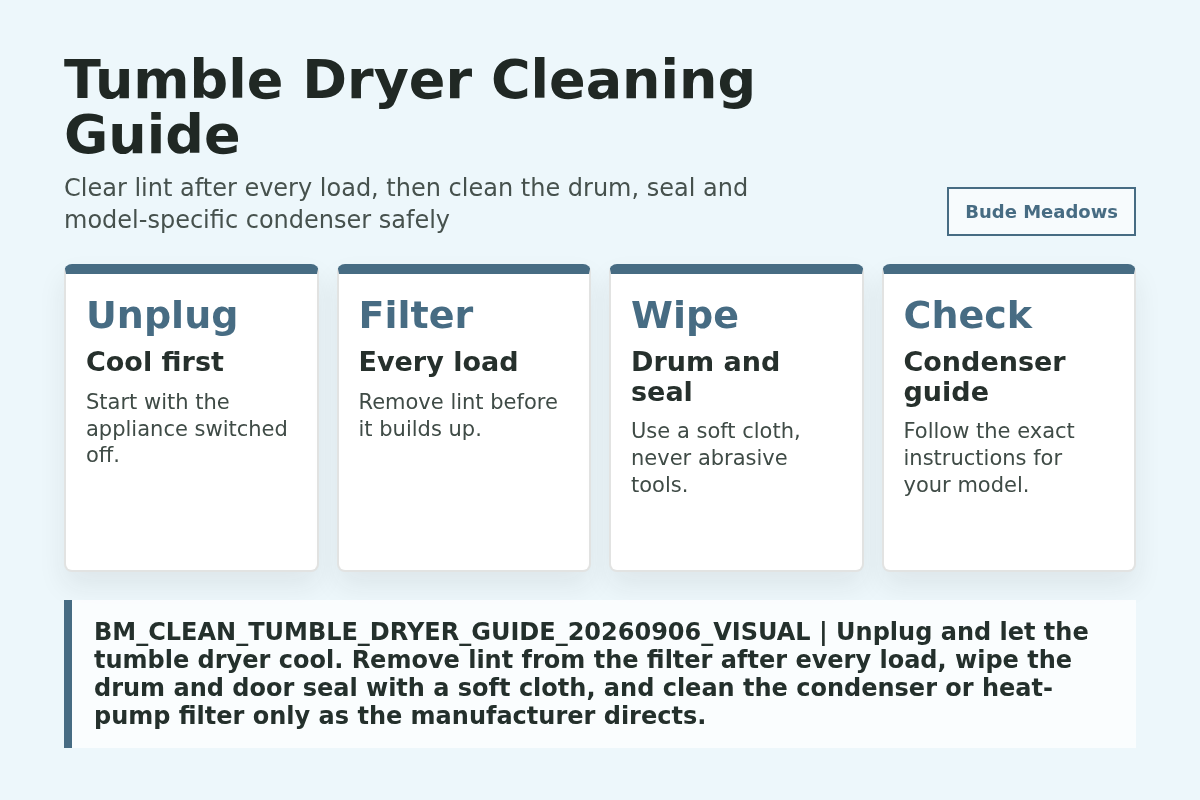
To clean a tumble dryer, make lint removal the routine that happens after every load. Then periodically wipe the drum and door seal, check the sensor area and follow the manufacturer’s method for the condenser, heat-pump filter or water tank. Do not push tools into ducts or take panels off unless the maker says it is safe.
Quick reference chart
| Question | Best answer | Why it matters |
|---|---|---|
| Lint filter | After every load | A clear filter improves airflow and drying performance. |
| Drum and seal | Wipe as needed | Removes residue and trapped lint. |
| Condenser or heat-pump filter | Follow the manual | Methods vary between dryer types. |
| Electrical parts | Keep dry | Do not spray or pour cleaning liquid into vents. |
| Persistent poor drying | Check professionally | Blocked ducting or a fault needs proper assessment. |
Step-by-step method
- Switch the dryer off, unplug it and let it cool before cleaning.
- Open the lint-filter compartment, remove the filter and clear lint with your fingers or a soft brush; refit it securely.
- Wipe the inside of the drum, the door glass and the rubber door seal with a soft barely damp cloth, then dry them.
- Check the sensor strips inside the drum if your model has them, and wipe them gently with a soft cloth if residue is visible.
- Empty the water container on a condenser dryer as the manufacturer directs.
- Clean the condenser, heat-pump filter or lower filter only using the model-specific instructions; do not force a vacuum nozzle or sharp tool into the appliance.
- Reconnect power only when every cleaned part is dry and correctly fitted.
How often should you clean a tumble-dryer filter?
Clear the lint filter after every load. This is the simplest way to maintain airflow and reduce lint build-up around the appliance.
Can you vacuum inside a tumble dryer?
Only vacuum accessible areas if the manufacturer permits it, and never push a nozzle deep into ducts or around electrical parts. A dryer that needs internal duct cleaning or still dries poorly should be checked professionally.
Why is a tumble dryer taking longer to dry?
A full lint filter, blocked model-specific condenser filter, overloaded drum, poor ventilation or a fault can all lengthen drying time. Start with the safe routine checks, then stop using the appliance and seek help if you notice burning smells, damage or repeated overheating.
What to read next
For more practical guides, see how to clean a washing machine, how to clean an air fryer, how to clean a dishwasher, Home Cleaning Guides hub.
Frequently asked questions
How often should you clean a tumble dryer lint filter?
Remove lint after every load, then follow the maker’s schedule for other filters and condenser parts.
Can you wash a tumble dryer lint filter?
Some makers allow occasional rinsing, but check the manual and let the filter dry fully before putting it back.
What should you not use to clean a tumble dryer?
Do not use abrasive tools, flood electrical parts, force tools into vents or remove panels unless your model instructions specifically allow it.
When should you stop using a tumble dryer?
Stop and seek professional help if there is a burning smell, visible damage, repeated overheating, unusual noises or persistently poor drying after normal safe cleaning.
BM_HARD_PUSH_20260906: Focused practical-guides cluster page with one primary URL for the full informational intent; current Ahrefs metrics are not claimed while matching-terms access is re-validated. Featured visual marker: BM_CLEAN_TUMBLE_DRYER_GUIDE_20260906_VISUAL.
For another safe appliance-care routine, see how to clean a vacuum cleaner, including its bin, brush roll and filters.